If you are running a business today, you already know that being visible on Google isn’t just a “nice-to-have”—it is the lifeblood of your digital growth. But if you have ever tried to look up how to actually get your website to rank, you have likely run into a wall of jargon.
At our digital marketing agency, we talk to business owners every day who are overwhelmed by the sheer volume of search engine optimization strategies out there. You hear terms like “backlinks,” “schema markup,” and “local citations” thrown around, and it is easy to wonder: Where do I even start?
The secret to mastering search engine optimization is realizing that it isn’t just one massive, monolithic task. It is broken down into specific pillars. Understanding SEO and its types is the fastest way to demperate the process and build a strategy that actually drives traffic, leads, and revenue.
Let’s break it down in a way that actually makes sense.
Table of Contents
What is SEO and Why Does It Matter?
Before diving into the different flavors of search engine optimization, let’s establish a solid foundation. Search Engine Optimization is the art and science of optimizing your website so that search engines like Google can easily understand your content and present it to users searching for relevant topics.
Think of Google as a digital librarian. Millions of new “books” (web pages) are added to the library every single day. Google’s job is to read them all, organize them, and hand the absolute best book to the person asking a question. Your goal is to make sure your book is the one Google hands over.
For a modern business, investing in search engine optimization delivers unmatched value:
- High-Intent Traffic: Unlike social media ads that interrupt someone’s scrolling, search users are actively looking for a solution. They have a problem right now, and they are looking for someone to fix it.
- Cost-Effective Long-Term Results: While paid ads stop delivering traffic the second you stop paying, a well-optimized blog post or landing page can bring you organic traffic for months or even years down the line.
- Builds Credibility: Let’s face it—users trust Google. If your business consistently appears at the top of the search results, users automatically perceive you as an industry leader.
- FOR MORE DETAILS CONTACT VV DIGITAL
The Core Types of SEO You Need to Know
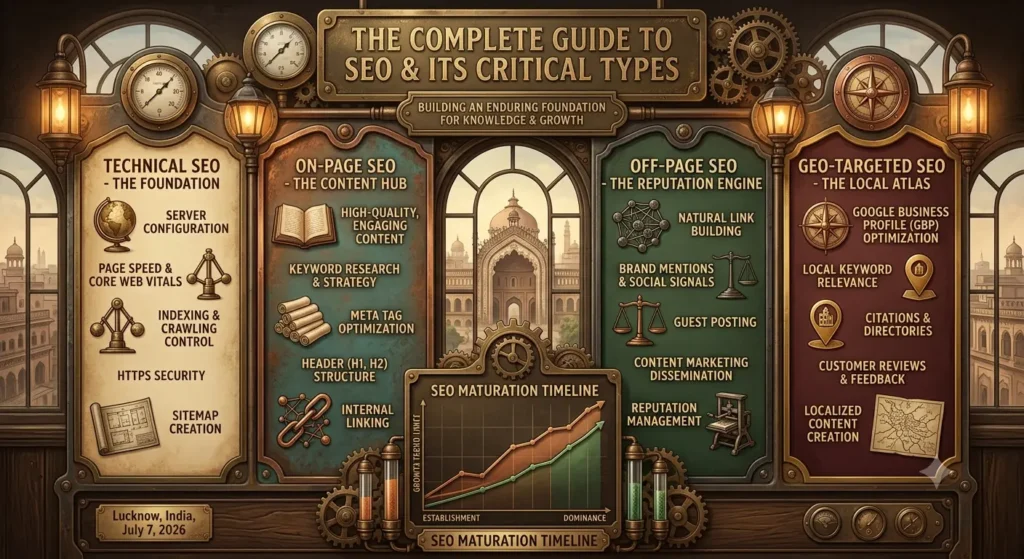
To build a high-performing website, you need to address search engines from multiple angles. While there are subtle variations, search engine optimization is generally divided into four main pillars, alongside a few specialized strategies.
1. On-Page SEO (Optimizing What Your Audience Sees)
On-page optimization is all about the elements on your website that you have direct control over. It focuses on helping search engines understand the exact context of your content so they know when to show it to users.
- Keyword Research: The bedrock of on-page strategy. You need to discover the exact phrases your target audience types into the search bar. We look for a balance of high search volume and manageable competition.
- High-Quality Content: Google’s primary mission is to satisfy user intent. Your content needs to answer the user’s question completely, accurately, and engagingly.
- Title Tags and Meta Descriptions: These are your digital storefront windows. The title tag is the clickable headline in search results, and the meta description is the short snippet below it. Crafting these with target keywords convinces users to click on your link instead of a competitor’s.
- Header Tags (H1, H2, H3): Using clear headings structures your content logically. It helps readers skim the page and helps search engine crawlers understand your content hierarchy.
- Image Optimization: Search engines can’t “see” images the way humans do. By using descriptive file names and adding alternative text (Alt text), you help search engines index your images while improving accessibility for visually impaired users.
2. Off-Page SEO (Building Trust and Authority)
If on-page optimization is about telling Google how great you are, off-page optimization is about getting everyone else to agree with you. It involves activities outside your own website that impact your rankings within search engine results pages (SERPs).
- Link Building: This is the heavyweight champion of off-page strategy. When another reputable website links back to your site (a backlink), Google views it as a vote of confidence. However, quality matters far more than quantity. One backlink from a highly trusted industry site is worth more than a hundred spammy links.
- Social Media Marketing: While social media shares don’t directly boost your Google rankings, they amplify your reach. More eyeballs on your content naturally lead to more brand mentions and organic backlink opportunities.
- Guest Blogging: Writing high-quality articles for other websites in your niche exposes your brand to a broader audience and secures authoritative links back to your site.
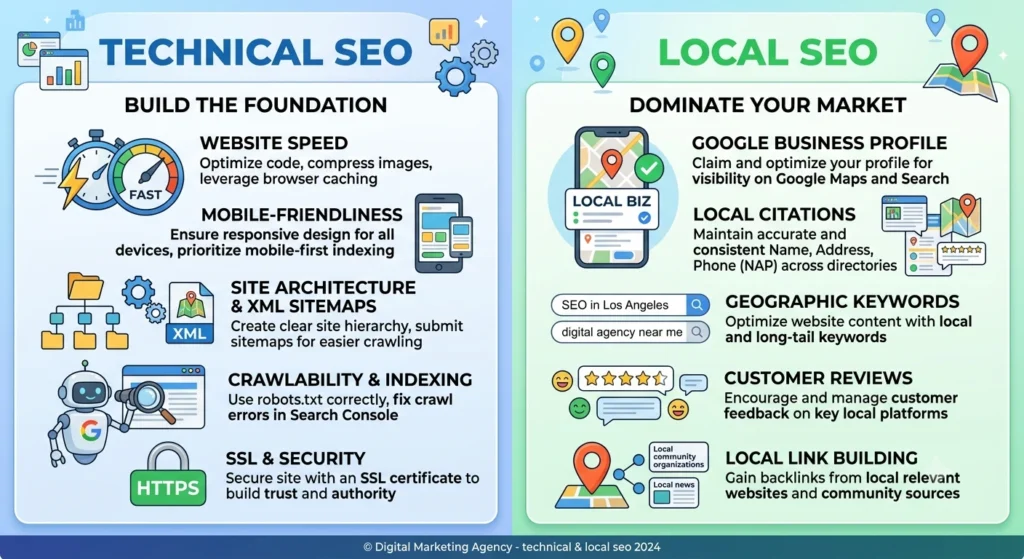
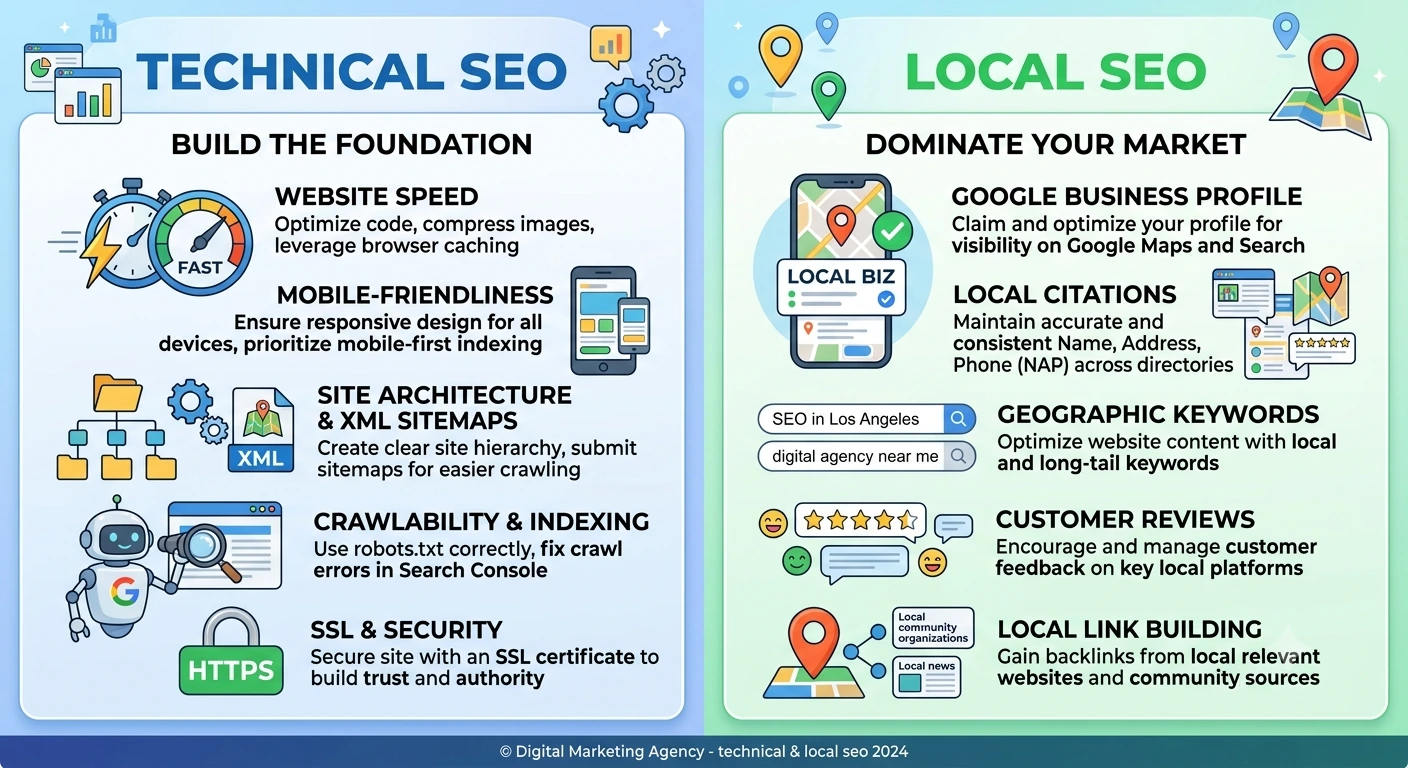
3. Technical SEO (Helping Search Engines Crawl Your Site)
You could have the best written content in the world, but if Google’s automated software bots (crawlers) can’t access your site, you will never rank. Technical optimization ensures your website meets the technical prerequisites of modern search engines.
- Site Speed: In a world of short attention spans, a slow website is a conversion killer. Google prioritizes fast-loading sites because they offer a better user experience.
- Mobile-Friendliness: The majority of web traffic happens on smartphones. Google operates on a mobile-first indexing system, meaning it looks at the mobile version of your site to determine rankings.
- XML Sitemaps: A sitemap is essentially a roadmap of your website that you hand directly to Google, ensuring it doesn’t miss any of your important pages.
- Secure Sockets Layer (SSL): Security is non-negotiable. Websites using HTTPS (indicated by the padlock icon next to the URL) protect user data and receive a ranking boost over unencrypted sites.
4. Local SEO (Winning Your Neighborhood)
If you operate a brick-and-mortar business or serve a specific geographic region, local search optimization is your secret weapon. It ensures your business appears when nearby customers search for your services.
- Google Business Profile (GBP): Setting up and optimizing your free GBP listing is crucial. This is what allows your business to appear in Google Maps and the coveted local “3-Pack” search results.
- Local Citations: Ensuring your business Name, Address, and Phone number (NAP) is completely consistent across the web (like on Yelp, YellowPages, and local directories) builds massive trust with Google.
- Customer Reviews: Actively encouraging satisfied customers to leave positive reviews on your Google profile signals to search engines that you are a reliable, high-quality local option.
Specialized SEO Types for Targeted Growth
Depending on your business model, you may need to lean heavily into specialized subsets of search engine optimization.
E-commerce SEO
An e-commerce storefront requires a very different approach than a standard service page. It focuses on optimizing product descriptions, implementing category page structures, and using product schema markup so prices and review stars show up directly in search results.
Content SEO
This focuses purely on creating an ongoing archive of valuable informational material, usually via a blog. By building out “topic clusters”—groups of interlinked articles covering a subject inside and out—you establish your website as a definitive authority in your niche.
FAQs About SEO and Its Types
How long does it take to see results from SEO?
Generally, you can expect to see noticeable improvements within 4 to 6 months. It is an investment that builds momentum over time as search engines gradually recognize your growing authority.
Can I do SEO on my own, or do I need an agency?
You can absolutely learn the basics of on-page optimization and content creation yourself. However, scaling up technical fixes, managing continuous algorithm updates, and executing competitive link-building campaigns often requires the dedicated expertise and tools of a professional digital marketing agency.
What is the difference between White Hat and Black Hat SEO?
White Hat optimization uses ethical tactics that follow search engine guidelines to provide genuine value to users. Black Hat optimization relies on risky, spammy shortcuts (like buying links or hiding invisible text) that might give you a temporary boost but will ultimately result in your website being penalized or banned by Google.
Which type of SEO is the most important?
They all depend on one another. Think of your website like a sports car: Technical SEO is the engine, On-Page SEO is the body and interior, and Off-Page SEO is the high-performance fuel. You need all of them working together to win the race.
Ready to Elevate Your Search Strategy?
Navigating the landscape of search engine optimization doesn’t have to be a solo journey. Every business has a unique digital footprint, and a one-size-fits-all approach rarely yields the results you deserve.
Whether your website needs a technical tune-up, a fresh content injection, or a robust local strategy, our digital marketing agency is here to design a custom roadmap that turns search results into revenue. Reach out to our team today, and let’s start driving real, measurable growth to your business.